

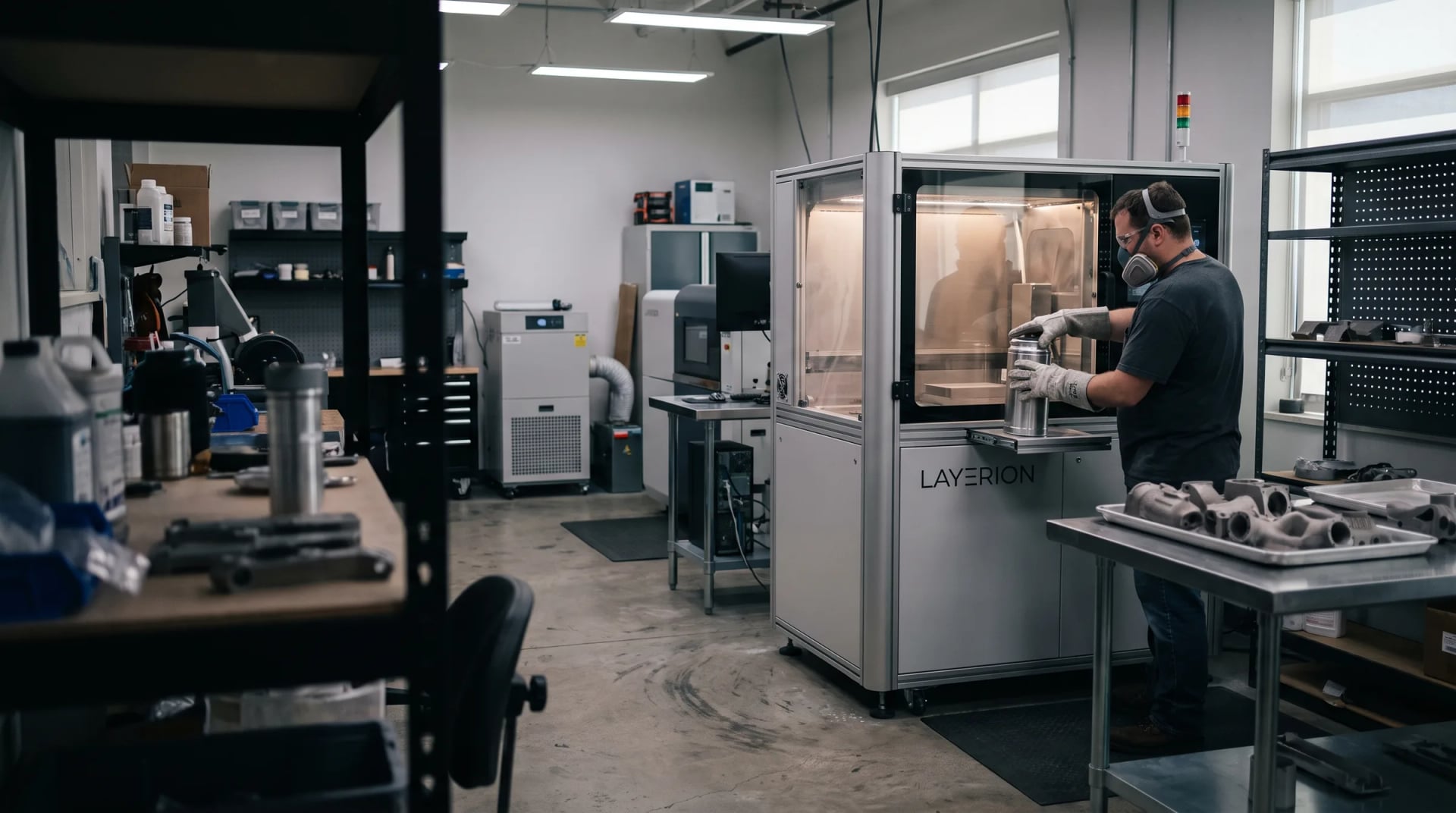
Metal 3D Printing
Geometry a cutting tool can't reach, printed in metal, at production volume.
2 Models
Single & Dual Laser
70 cm³/hr
Top Build Rate
±20 μm
Best Positioning Accuracy
Not sure which metal 3d printing is right for you?
Our AI can help you compare machines, find parts, and explore your options.
Advantages
Why Choose Metal 3D Printing?
Geometry No Cutting Tool Can Reach
Internal lattices, conformal cooling channels and topology-optimized structures print as one solid part.
Safe Reactive-Metal Processing
Closed-loop powder handling and sub-100 ppm oxygen atmosphere make titanium and aluminum printing safe.
Full Process Training, Not Just Machine Training
Build-file preparation, powder handling and material qualification are all covered on installation.
Complete Post-Processing Workflow Quoted
Heat treatment, support removal and finish machining are scoped alongside your printer purchase.
Featured
LP-400 Dual
Dual-laser powder-bed fusion printer doubling build rate on a larger production envelope.
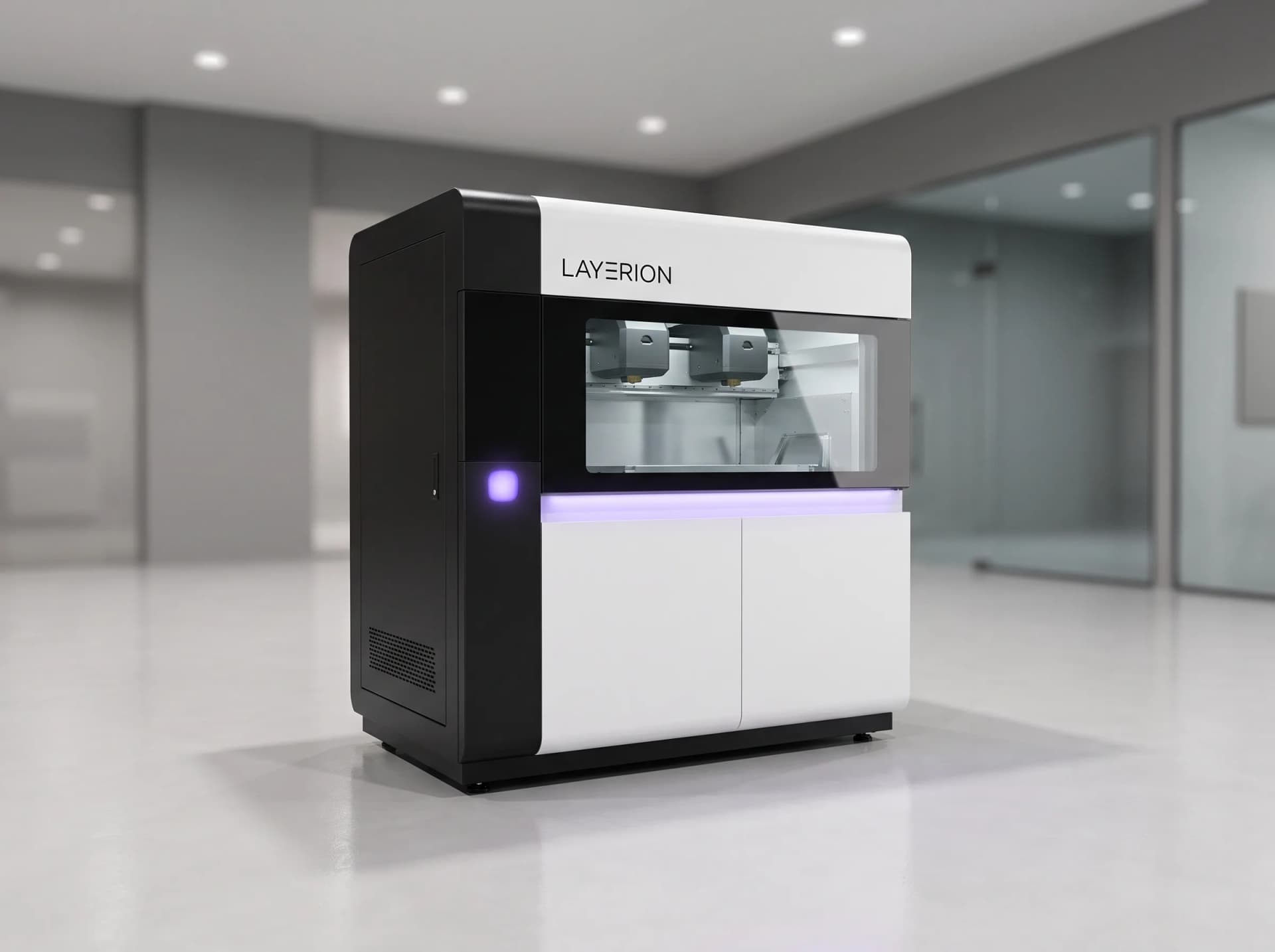
Layerion LP-400 Dual
Build volume
400 x 400 x 450 mm (15.7 x 15.7 x 17.7 in)
Laser configuration
2 x 500 W fiber lasers, overlapping scan fields
Layer thickness
20 - 60 μm
Minimum spot size
80 μm
Our Machines
The Complete Metal 3D Printing Lineup
Each system is engineered for specific applications. Compare specs to find the right fit.
metal powder-bed fusion printer
LP-400 Dual
The LP-400 Dual is Layerion's production metal printer, pairing two overlapping 500W fiber lasers over a 400 x 400 x 450 mm chamber to roughly double the build rate of the single-laser LP-250 while also giving you a much larger part envelope. It's the flagship platform Tollaston installs for customers who've moved past prototyping and need metal additive to actually hit production schedules — nesting multiple parts per build, printing larger single components, or simply running more volume through the same floor space. The same Layerion Forma control and material library carry over from the LP-250, so a shop that's already qualified its process on the smaller machine moves up without requalifying every parameter from scratch.
- Build volume
- 400 x 400 x 450 mm (15.7 x 15.7 x 17.7 in)
- Laser configuration
- 2 x 500 W fiber lasers, overlapping scan fields
- Layer thickness
- 20 - 60 μm
- Minimum spot size
- 80 μm
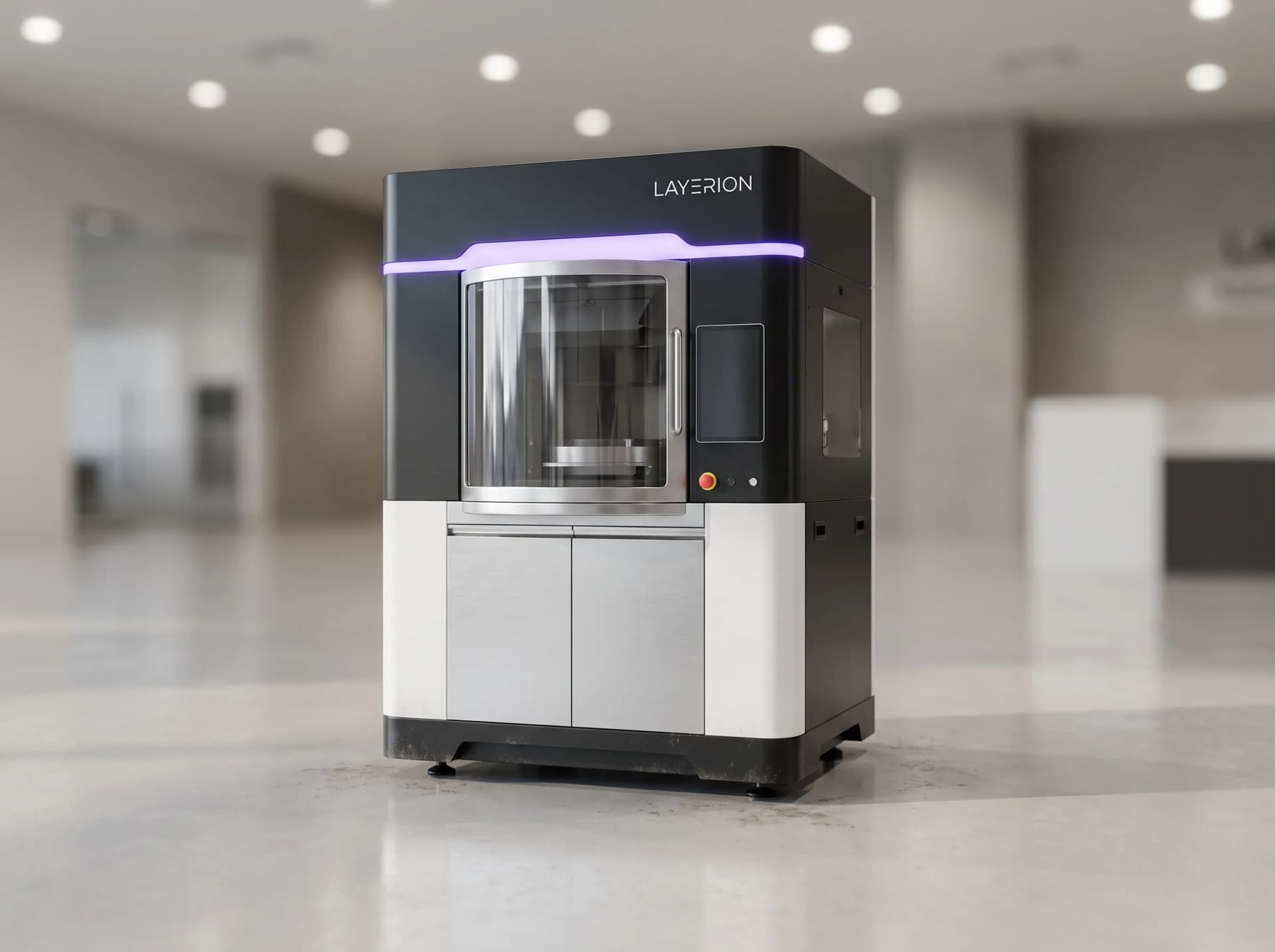
metal powder-bed fusion printer
LP-250
The LP-250 is Layerion's entry metal 3D printer, using a single 500W fiber laser to fuse metal powder layer by layer inside a Ø250 x 325 mm build chamber. It's the platform Tollaston recommends for shops printing their first titanium, stainless or tool-steel parts — internal lattice structures, conformal-cooled mold inserts and complex geometries that traditional machining can't produce economically or at all. An inert argon or nitrogen atmosphere holding oxygen below 100 ppm keeps reactive metal powders like titanium safe to process, and Layerion's Forma control manages exposure strategy without requiring a metallurgy background to get a first print right. We pair every LP-250 with build-file training so your team owns the process end to end, not just the button-press.
- Build volume
- Ø250 x 325 mm (Ø9.8 x 12.8 in)
- Laser configuration
- 1 x 500 W fiber laser
- Layer thickness
- 20 - 60 μm
- Minimum spot size
- 80 μm
See everything we carry from Layerion.
Side by Side
Compare Systems
See how each platform stacks up across the specs that matter most.
LP-400 DualFeatured
- Build Volume
- 400 x 400 x 450 mm
- Lasers
- 2 x 500 W
- Build Rate
- up to 70 cm³/hr
- Positioning Accuracy
- ±25 μm
- Copper Alloys
- Qualified
LP-250
- Build Volume
- Ø250 x 325 mm
- Lasers
- 1 x 500 W
- Build Rate
- up to 35 cm³/hr
- Positioning Accuracy
- ±20 μm
- Copper Alloys
- Not qualified
| Specification | LP-400 DualFeatured | LP-250 |
|---|---|---|
| Build Volume | 400 x 400 x 450 mm | Ø250 x 325 mm |
| Lasers | 2 x 500 W | 1 x 500 W |
| Build Rate | up to 70 cm³/hr | up to 35 cm³/hr |
| Positioning Accuracy | ±25 μm | ±20 μm |
| Copper Alloys | Qualified | Not qualified |
Applications
Industries We Serve
Metal 3D Printing systems are trusted across diverse industries and production environments.
FAQ
Metal 3D Printing Questions
Answers to common questions about our metal 3d printing products.
A laser selectively melts a thin layer of metal powder, fusing it into a solid cross-section; the build plate lowers, a fresh layer of powder spreads, and the process repeats until the full part is built up layer by layer — producing fully dense metal parts with geometry no cutting tool could reach.
The LP-250 uses one laser over a smaller chamber, ideal for prototypes and low-volume parts; the LP-400 Dual uses two overlapping lasers over a much larger chamber, roughly doubling build rate for shops running production volume.
Both machines print stainless steel, tool steel, titanium and nickel superalloys; the LP-400 Dual additionally supports copper alloys for thermal-management applications.
Most parts need support removal and stress-relief heat treatment, and critical surfaces or tight-tolerance features are typically finish-machined — we quote a complete post-processing workflow alongside your printer purchase.
Yes — metal powder-bed fusion is established in aerospace, medical and tooling production today, and Tollaston backs both Layerion models with the same installation, training and service standards as our machining equipment.
Ready to Discuss Your Metal 3D Printing Solution?
Our team has 32+ years of experience helping Canadian manufacturers find the right cutting and processing equipment.
32
Years in Business
4,800+
Machines Installed
46
Factory-Trained Technicians
Request a Quote
Tell us about your application and we'll recommend the right machine for your operation.
Financing Available
Flexible payment options on qualifying equipment.
Or email us at [email protected]