

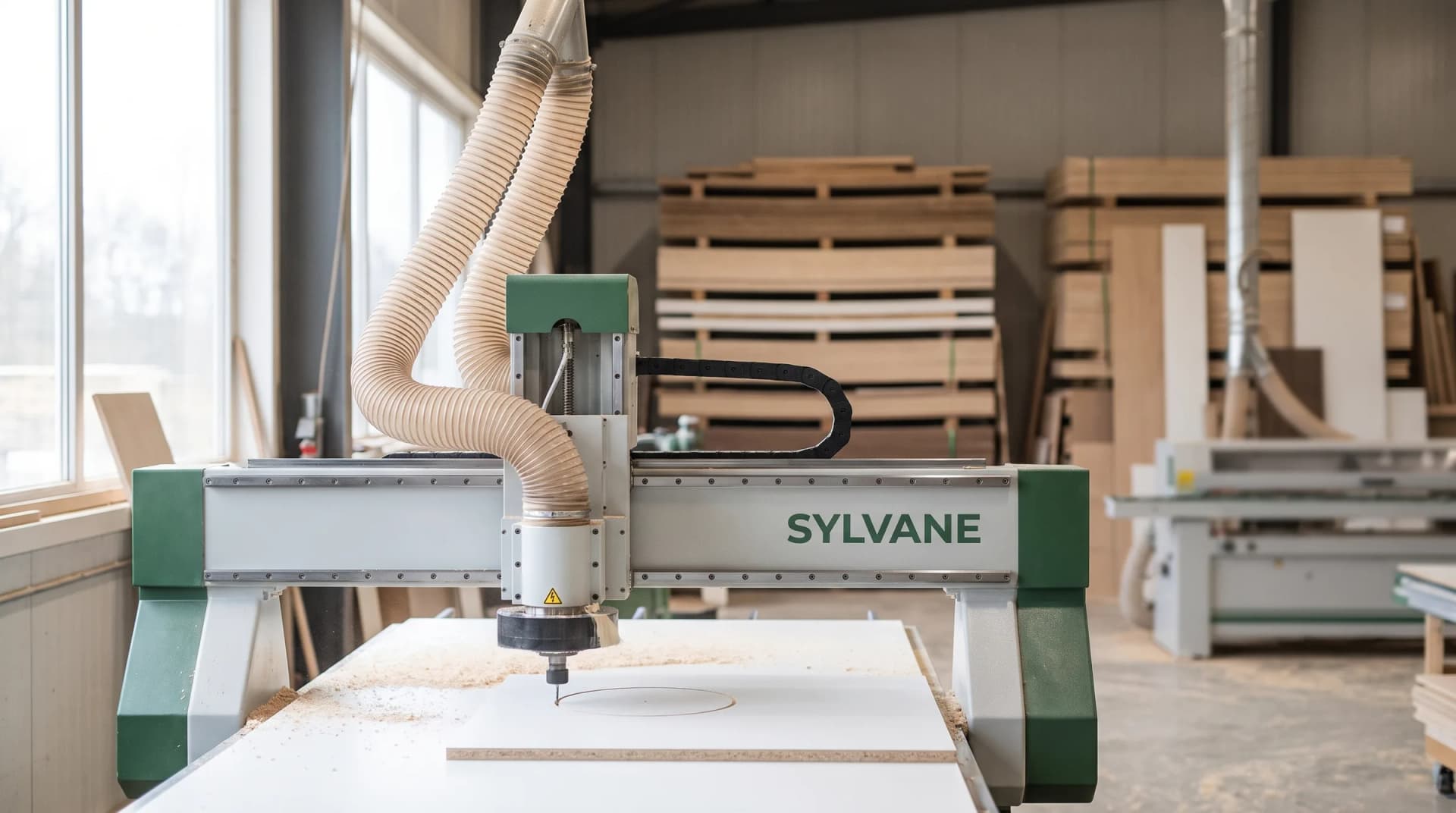
Nested-Based CNC Routers: What Cabinet Shops Should Check Before Buying
Table size and spindle horsepower are the easy numbers to compare. Vacuum zones, tool changer capacity and dust collection sizing are what actually decide whether a router keeps up with your shop.
A nested-based CNC router is often a cabinet shop's first real step into automated production, and it is also one of the easiest machines to under-spec by chasing table size and horsepower numbers instead of the details that actually determine daily output. If you are shopping for your first — or next — router, here is what actually matters.
Start with vacuum, not spindle power
The single most common regret we hear from shops running an older or lower-end router is inadequate vacuum hold-down. A panel that lifts or shifts mid-cut ruins the part, damages the tool, and in the worst case damages the spindle. Look for independently switchable vacuum zones sized to your typical sheet layout, not a single full-table pump that wastes suction on empty table space around a small nest.
Tool changer capacity and type
An 8-station linear automatic tool changer covers most cabinet work — sizing, pocketing, drilling, hinge boring and profiling — without constant manual tool swaps. Shops running more complex parts, dovetail joinery, or a wide range of edge profiles should look at a higher-capacity ATC or a combination linear-plus-carousel setup. Whatever the count, check how quickly the changer actually swaps tools; a slow changer erodes the throughput advantage nesting is supposed to deliver.
Nesting software licensing
The router hardware is only half the purchase. Confirm exactly what nesting software is included, what it costs to add seats, and whether it is a perpetual license or a subscription. We have seen shops discover — after the machine was already on the floor — that the software driving daily production carries an ongoing fee they had not budgeted for.
Dust collection sizing
A 9 kW spindle moving fast through melamine and MDF generates a genuinely large volume of chip and dust. Undersized dust collection is the quiet cause of a surprising number of service calls — clogged ducting, overheated spindles, and dust settling into linear rails and ballscrews. Size your collector to the machine's port diameter and CFM requirement, not to what you already have sitting in the shop.
Gantry construction and rail maintenance
Heavier gantry construction resists deflection at speed, which shows up directly in edge quality on long straight cuts. Ask what maintenance the rails and racks require and how often — automatic lubrication systems reduce this to a non-issue, while manual-grease designs need a disciplined schedule or they wear unevenly.
A pre-purchase checklist
- Table size matched to your actual sheet sizes, not a generic 5' x 10' default
- Vacuum zones sized and switchable independently
- Tool changer capacity matched to your part complexity, not just your budget
- Nesting software licensing terms confirmed in writing before you sign
- Dust collection sized to the spindle's CFM requirement
- Gantry lubrication: automatic or manual, and what that means for your maintenance schedule
- Local parts and service support — a router that's down for two weeks waiting on a part from overseas costs more than the machine ever saved
New or used?
A well-maintained used router — one with documented spindle hours and a clean service history — is often the smarter first machine for a shop testing whether nesting fits its workflow before committing to a brand-new configuration. We carry used Sylvane routers across our branches, each with full service records from the previous owner, and our woodworking applications team can walk you through exactly what to check before you buy either way.
Floor space and material flow
It is easy to size a router to the machine itself and forget the space around it. A nested router needs clear infeed space for full sheets, a load/unload routine that does not bottleneck the spindle while it waits, and enough offload area that finished parts do not pile up against the gantry's travel. Walk your intended location with tape on the floor before the machine arrives — more than one shop has discovered, only after delivery, that a forklift cannot approach the infeed side without a wall modification.
Training and the learning curve
Nesting software, tool changer programming and vacuum zone management are all new skills for a shop moving up from a manual router or an outsourced cutting service. Ask what training is included with the purchase, how many days it covers, and whether remote support is available in the weeks after installation when questions inevitably surface that were not covered on day one.
Bring us your parts
The fastest way to right-size a router is to bring in your actual cut list or a sample panel layout. We'll size the table, vacuum zones and tool changer to your real work rather than a generic configuration, and we can talk through financing — ask your accountant about capital cost allowance in Canada or Section 179 in the US for how the timing of a purchase might affect this year's taxes.
FAQ
Common questions
Short answers to the questions we are asked most about this topic.
Most cabinet shops do well with four to six independently switchable zones on a standard sheet-sized table, which lets the machine hold down small nests without wasting suction across empty table area.
For most cabinet, closet and millwork production, yes. Shops doing more complex joinery or a wide range of edge profiles may want a higher-capacity changer to avoid manual tool swaps mid-run.
It varies by manufacturer and dealer. Always get the licensing terms — perpetual versus subscription, and the cost of additional seats — in writing before you finalize the purchase.
Yes, provided it comes with documented spindle hours and service history. It's a lower-risk way to prove out the nesting workflow before committing to a larger new configuration.